
Hannibal Lecter's Many Faces
A look at the actors who brought the iconic villain to life

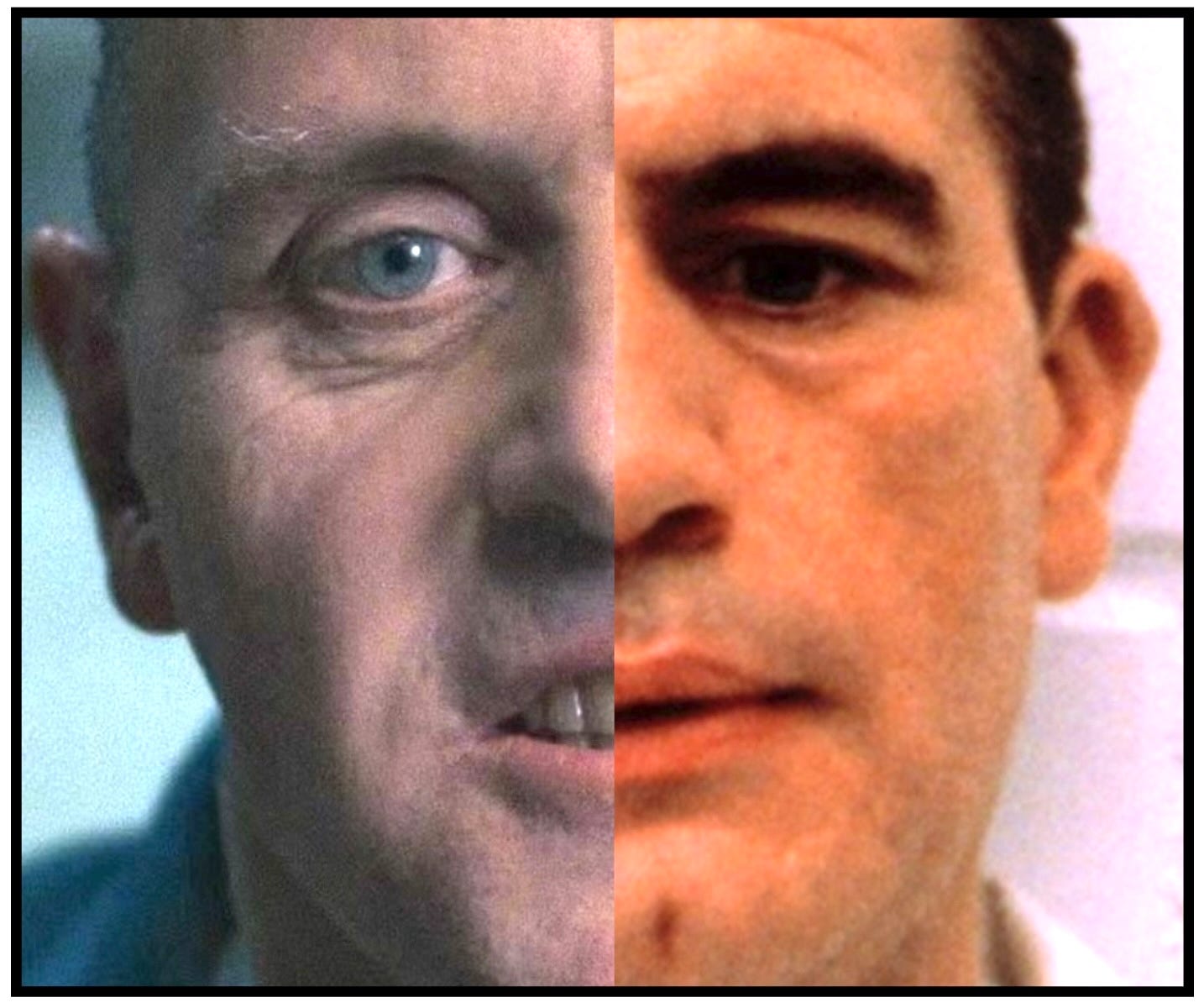
After the release of the movie, The Silence of the Lambs in 1991, the character of Dr. Hannibal Lecter immediately exploded into the moviegoing public’s imagination. This is largely due to Anthony Hopkins’ Oscar-winning performance in the role.
However, Hopkins wasn’t the first actor to bring the brilliant psychopath to life.
In 1986, film director Michael Mann made Manhunter, starring William Peterson. Featured in the film is the British actor, Brian Cox, who brought the first version of Dr. Hannibal Lecktor (I’m not sure why the spelling is different in this film) to the screen.
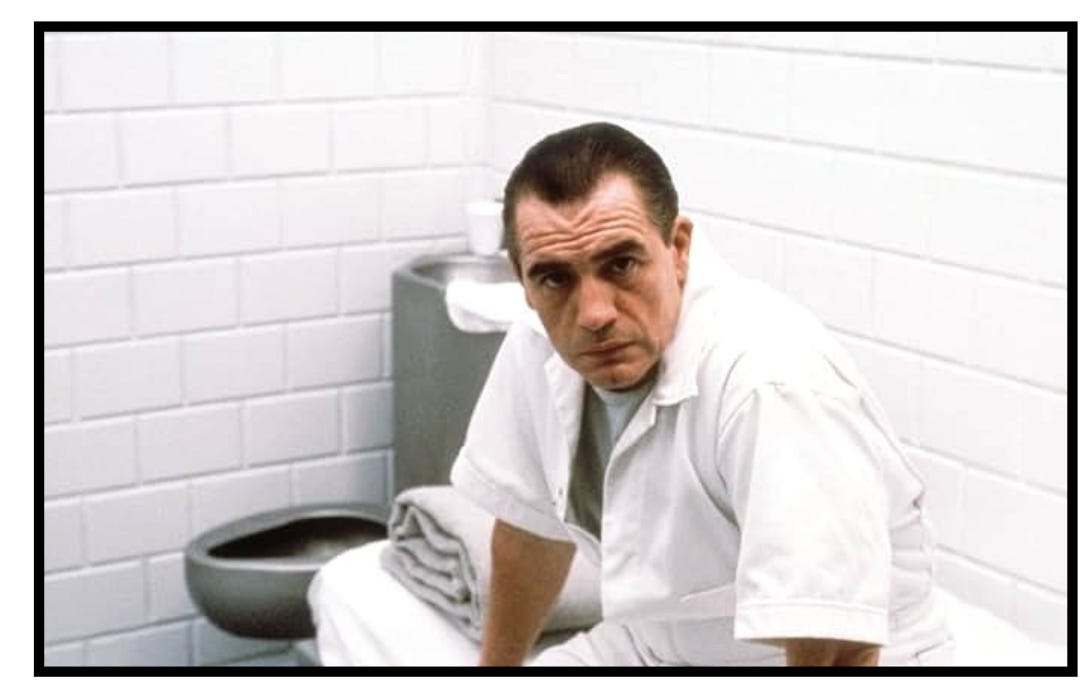
Manhunter is based on the novel Red Dragon by Thomas Harris (who also wrote the novel The Silence of the Lambs and created the character of Hannibal Lecter).
Yet, Michael Mann’s film is very different than Jonathan Demme’s The Silence of the Lambs, which was made five years later. In addition, Brian Cox’s portrayal of Dr. Hannibal Lecktor is also quite different from Anthony Hopkins’ Dr. Lecter.
So which Hannibal is better: Brian Cox’s Dr. Lecktor or Anthony Hopkins’ Oscar winning Dr. Lecter?
It’s a question moviegoers have been debating for years.
Released in 1986, Manhunter plunges us into the world of William Graham, a former FBI agent who is dragged back to the department to help catch a serial killer on the loose. You see, before his self-imposed retirement, Graham was a profiler for the department. He studied the minds of criminals to examine their thoughts while visiting crime scenes.
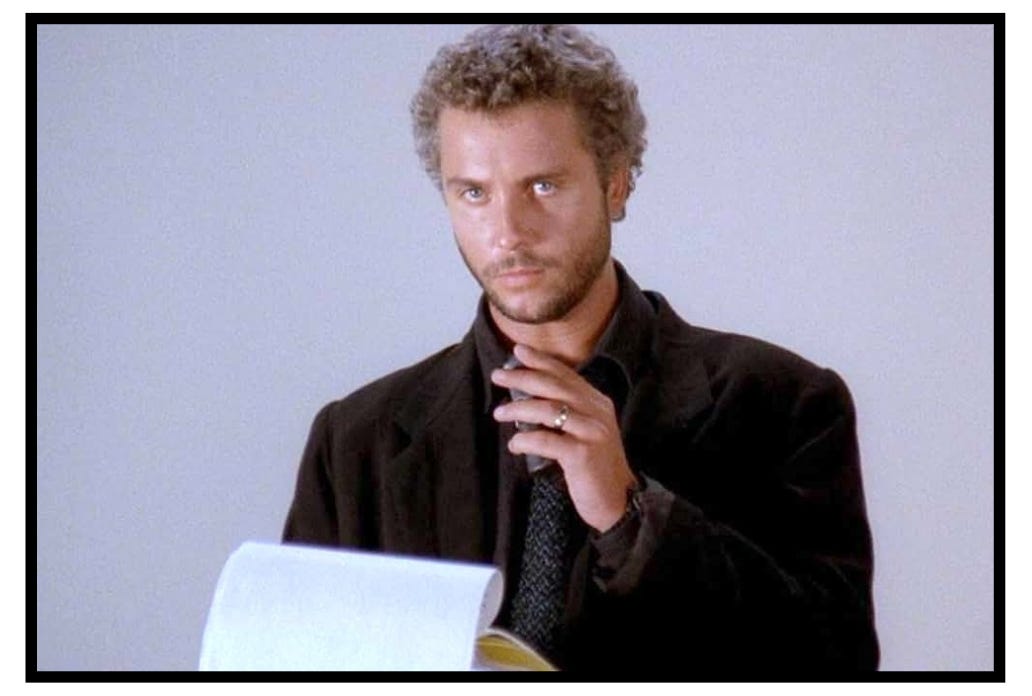
Graham has the uncanny ability to put himself into the mindset of the killer. However, every time he does this, it takes a psychological toll on his mental health. For example, after his near fatal encounter with Dr. Lecktor, Graham was almost driven to the point of insanity, which is why he went into a self-imposed retirement.
However, now that another serial killer nick-named “The Tooth Fairy” is randomly butchering families as they sleep, Graham must find a way to solve the case.
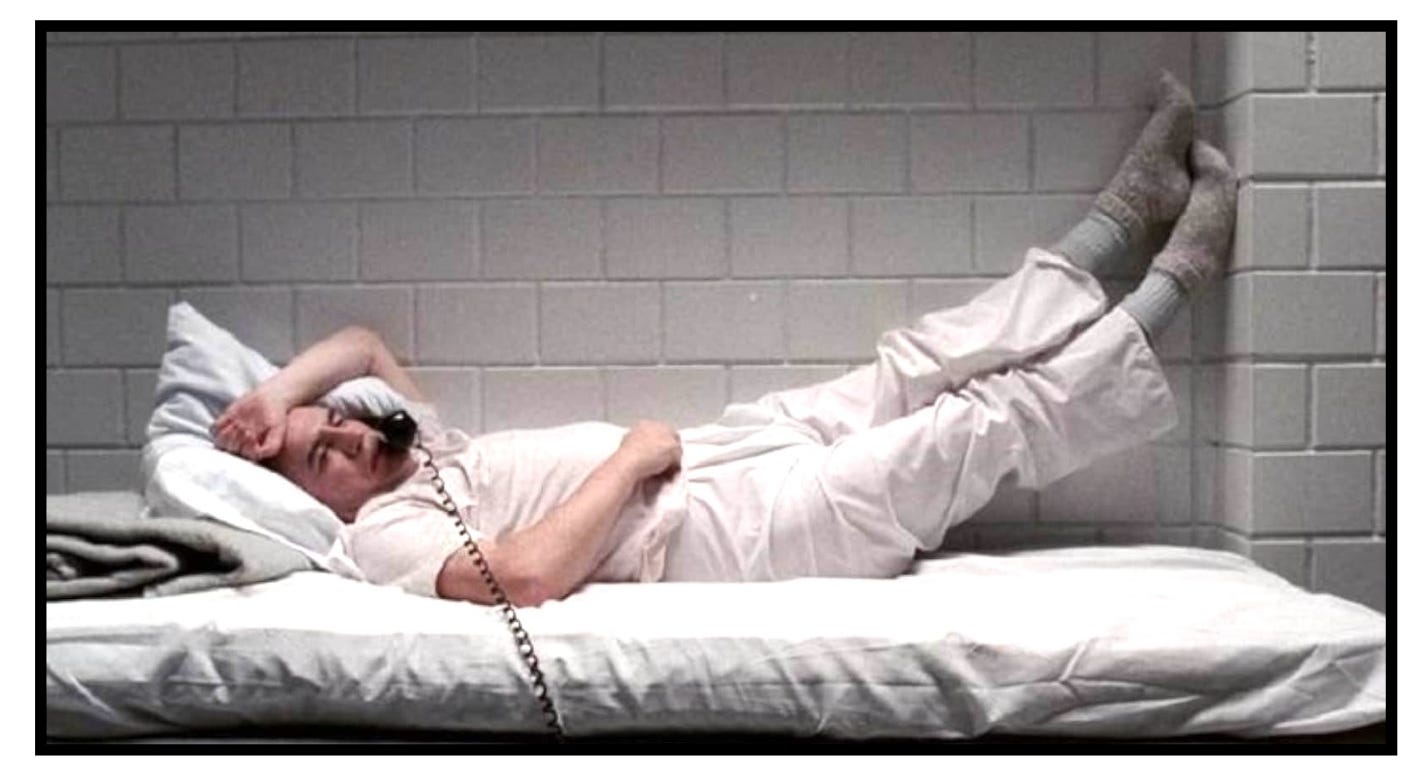
To help him get back into the mindset of a serial killer, Graham goes to visit Dr. Lecktor, now housed in a state of the art modern prison where everything is painted white.
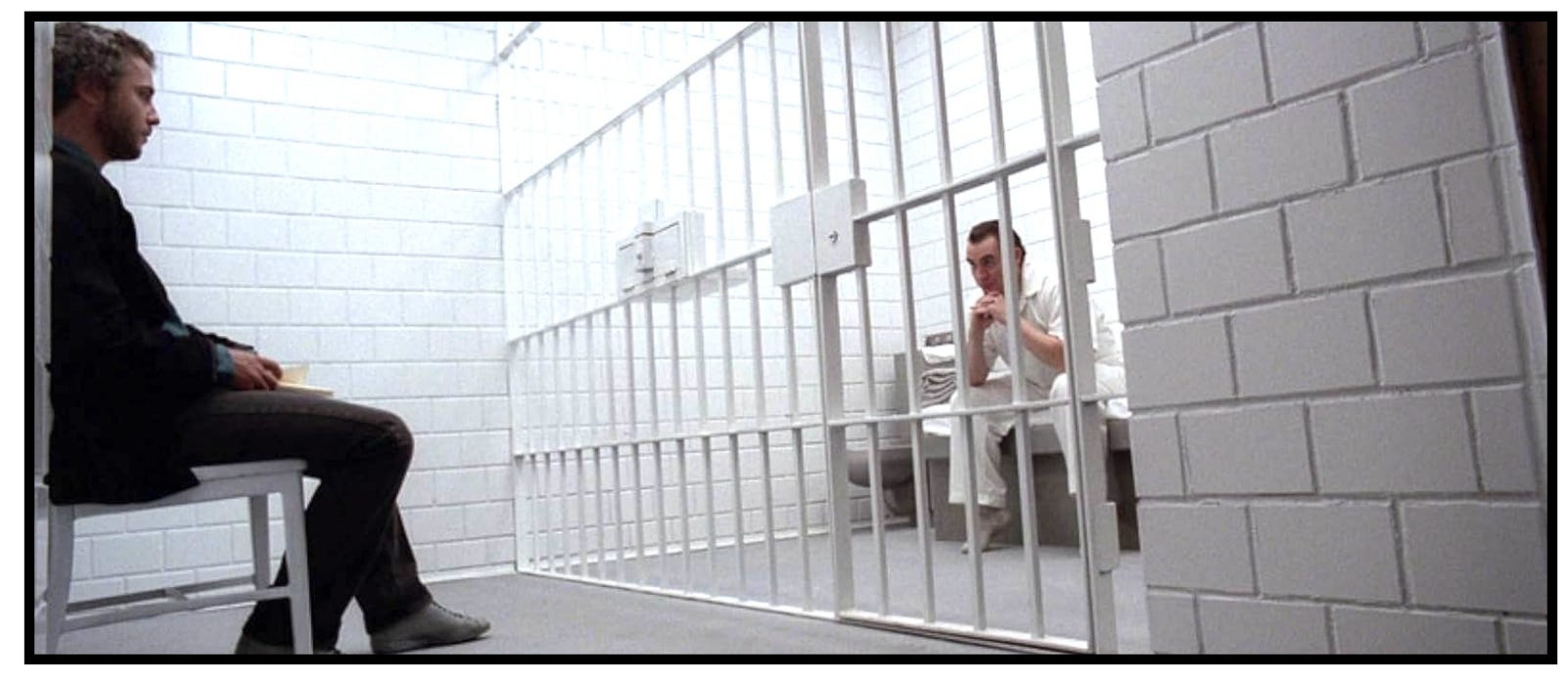
In this scene, Brian Cox’s Dr. Lecktor emerges from the whiteness of his cell dressed in an all white prison uniform. In contrast, William Peterson’s Will Graham sits on the other side of the jail bars dressed in a black suit. It’s a nice inversion of the old western cliché of having the good guys wear white cowboy hats and the bad guys wear black hats.
Mann’s use of white here is also deliberate. In many Eastern cultures, white is a symbol for death or despair. In literature, white is also used for this purpose, most notably in Melville’s classic novel, Moby Dick. Having Dr. Lecktor emerge from the whiteness of his cell in this way immediately makes us wary of him from the moment he first appears onscreen.
Yet, with his British accent and mild manner, Brian Cox’s Dr. Lecktor is most notable for how understated, even thoughtful, he comes across to viewers.
When Lecktor asks, “Dream much, Will?” to Will Graham in this scene, it almost sounds like he’s sincerely interested in the health of the man who took him off the streets. Yet, there’s also something chilling about Lecktor’s demeanor that hints at the predator lurking under the surface.
To me, it’s the subtlety of Cox’s performance as Lecktor that makes it so memorable.
Unfortunately, Manhunter wasn’t a Hollywood hit at the time it was released (although it’s since become a cult favorite for many people), so it’s not surprising that Thomas Harris’ creation of Dr. Lecter didn’t become a cultural icon until Anthony Hopkins portrayed him five years later in The Silence of the Lambs.
Directed by the late Jonathan Demme, The Silence of the Lambs is also based on a novel by Thomas Harris.
In both the novel and film, Clarice Starling, (Jodie Foster), a young FBI trainee, is assigned to help catch a serial killer known as Buffalo Bill, who got his nickname from the way he murders women and skins their bodies.
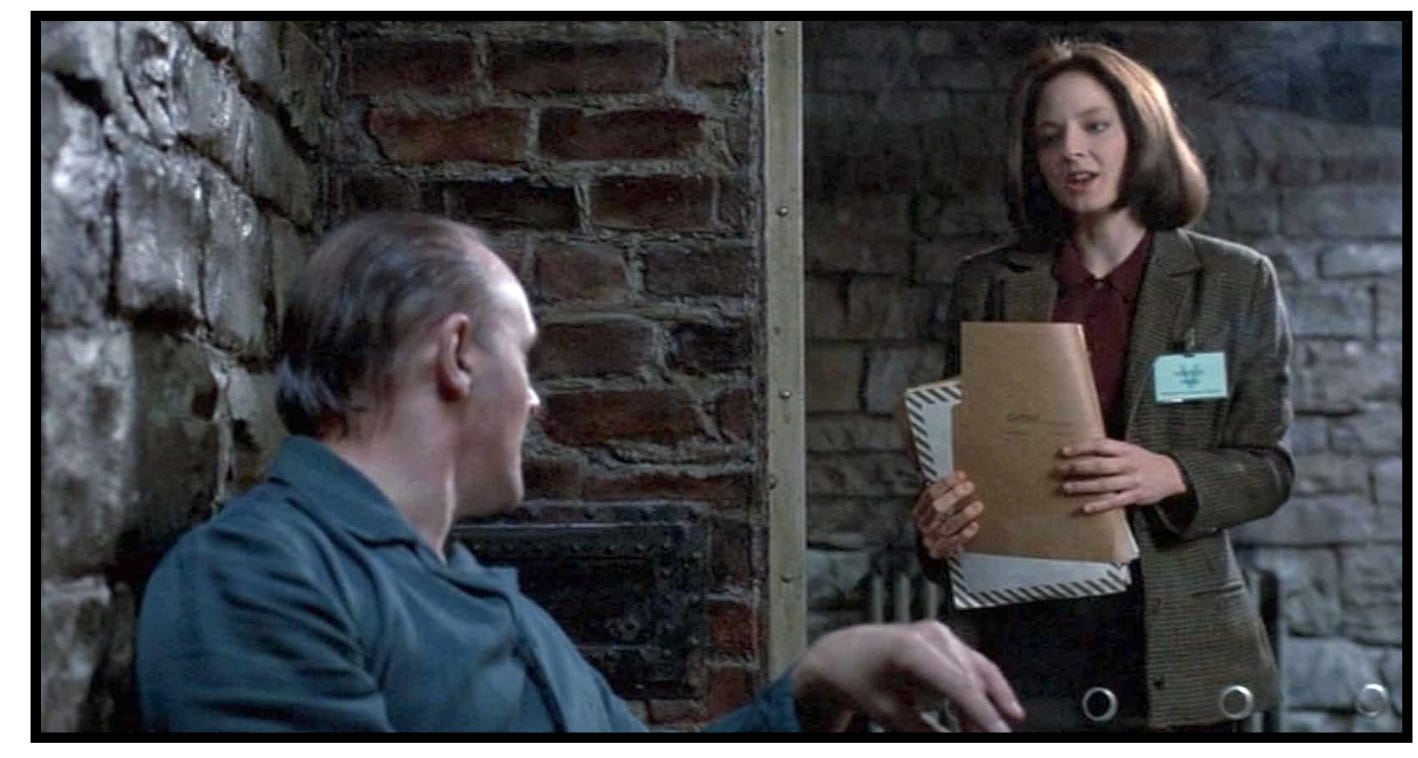
Like William Graham in Manhunter, Clarice interviews Dr. Hannibal Lecter in order to gain insight into the killer's mind. Still imprisoned, Lecter agrees to help her, but only if Clarice will agree to exchange personal information about her past.
As Clarice follows the clues provided by Lecter, she uncovers Buffalo Bill's identity and ultimately tracks him down, rescuing the killer’s latest captive before the young girl is murdered.
At the end of the film, Lecter escapes custody and calls Clarice one last time. In their brief phone conversation, Lecter tells Clarice he has no plans to call on her but that he’ll be "having an old friend for dinner." Lecter hangs up and watches his old nemesis, Dr. Fredrick Chilton (Anthony Heald), get off a plane and walk through the streets of an unidentified Caribbean island. Lecter follows behind him waiting for the right moment to attack.
Unlike the earlier film, Manhunter, which was very stylized, director Jonathan Demme takes a more traditional approach to tell the story of The Silence of the Lambs. In this film, Demme weaves in many gothic elements, such as placing Dr. Lector’s cell in the basement of an old brick prison. In fact, as Clarice goes into the prison’s basement for her first encounter with Dr. Lecter, it’s almost as if she’s descending into hell herself.
This gothic approach also carries over to Anthony Hopkins’ Academy-award winning performance as Lecter too.
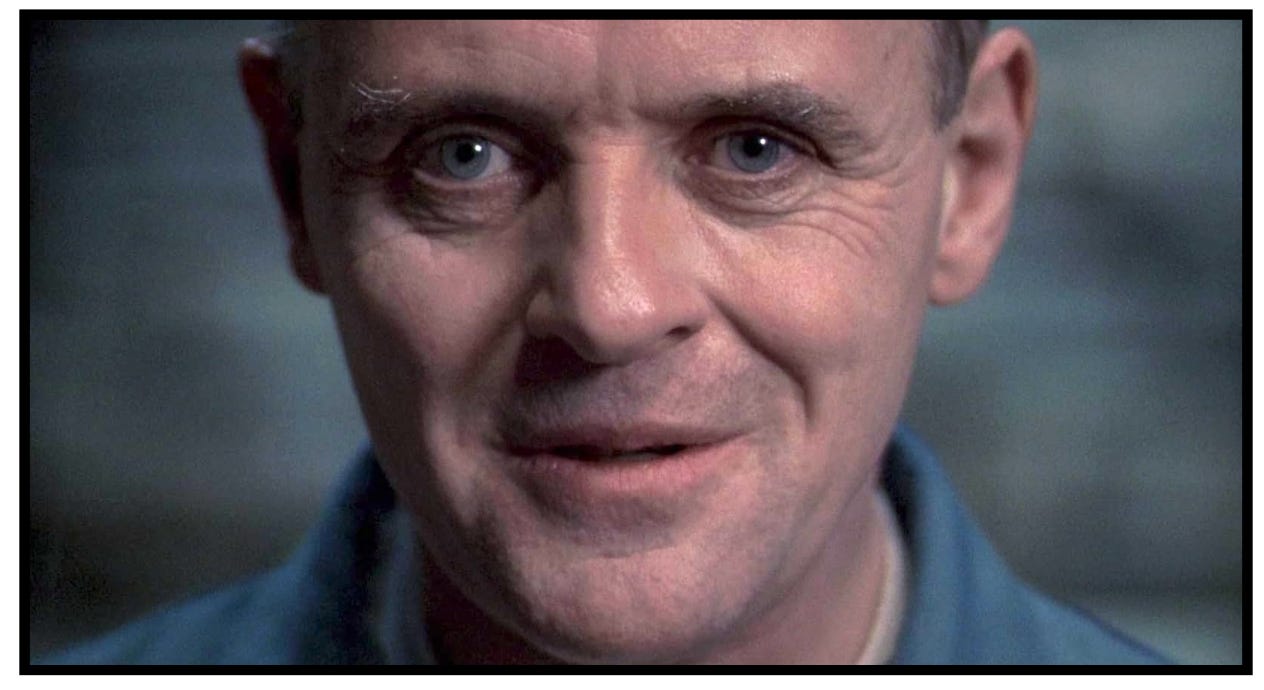
With his highly cultivated accent, overly precise diction, and intense unwavering eye contact, Hopkins’ Dr. Lecter has always struck me as being demonic, almost vampiric, rather than your typical serial killer. The fact that his jail cell is located in the musty basement made up of old bricks only reinforces this notion.
For his portrayal of Dr. Lecter, Hopkins often plays it to the hilt, which can make his performance seem like it was meant for the stage and not the screen.
In fact, a lot of critics accused Hopkins of being “too hammy” in the film. Yet, for many viewers, it’s what makes Hopkins’ performance so memorable. It’s both chilling and unforgettable because it’s unnerving to behold.
And, even though he’s only onscreen for approximately 16 minutes, it’s why Hopkins dominates The Silence of the Lambs. His presence is felt throughout the film, regardless of whether he’s onscreen or not. This is probably why he won the Oscar for such a small role.
Of course, this is totally opposite of Brian Cox’s realistic but cold Dr. Lecktor in Manhunter, which is often overshadowed by the creepiness of Tom Noonan’s brilliant performance as the serial killer, Francis Dollarhyde.
In fact, throughout Manhunter, Noonan hovers over the film in much the same way that Hopkins hovers over The Silence of the Lambs.
So, the question remains, which Hannibal do you prefer? Cox’s Dr. Lecktor or Hopkins’ Dr. Lecter?
Before we can answer that question, there are few things we need to consider.
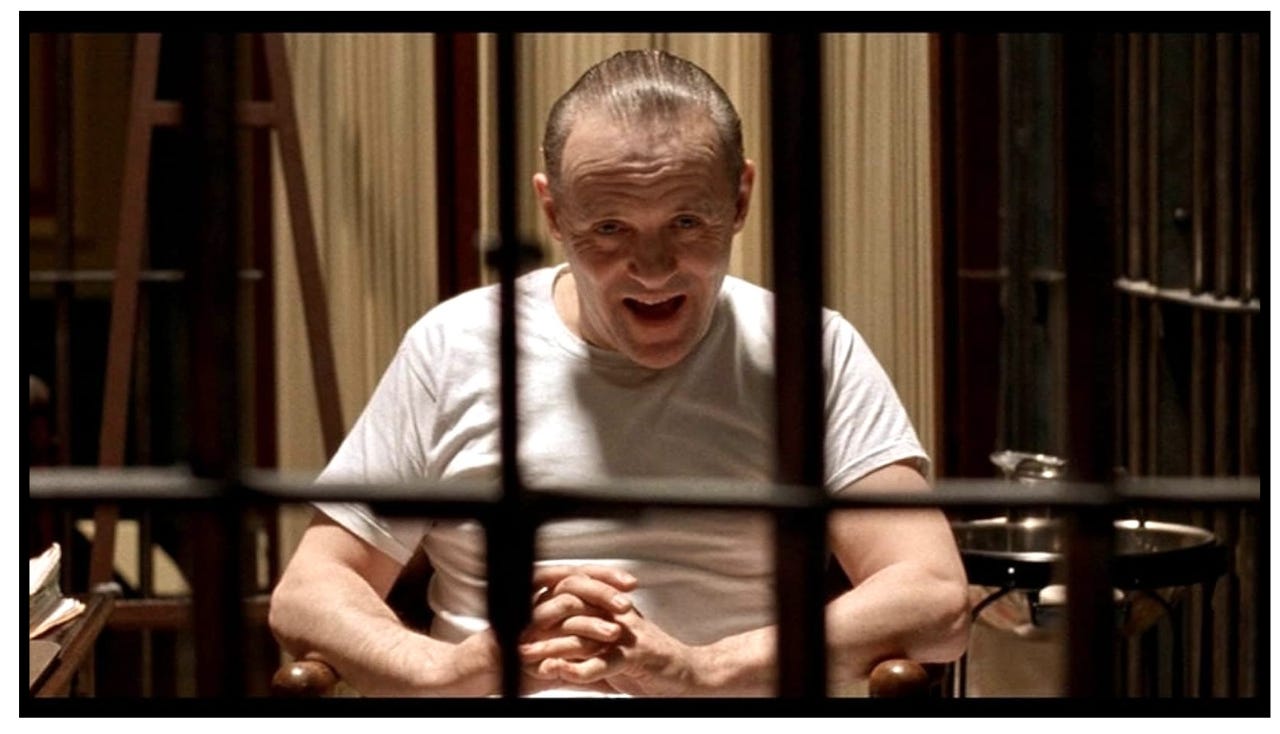
First, Anthony Hopkins has an edge over Brian Cox for a few reasons. First, his Oscar winning performance is hard to ignore. It calls attention to itself throughout the film due to Hopkins’ flamboyance in the role. Plus, Hopkins has become so closely identified with the character, especially after appearing as Dr. Lecter in the sequel, Hannibal, and in the remake of Manhunter, Red Dragon, that it’s hard for many people to picture anyone else in the role.
Even so, there is a third more recent version of Dr. Lecter that we need to discuss: Mads Mikkelsen’s performance as Dr. Lecter in the television series, Hannibal.
Mikkelsen’s approach is fascinating because it combines Cox’s restraint with Hopkins’ demonic menace.
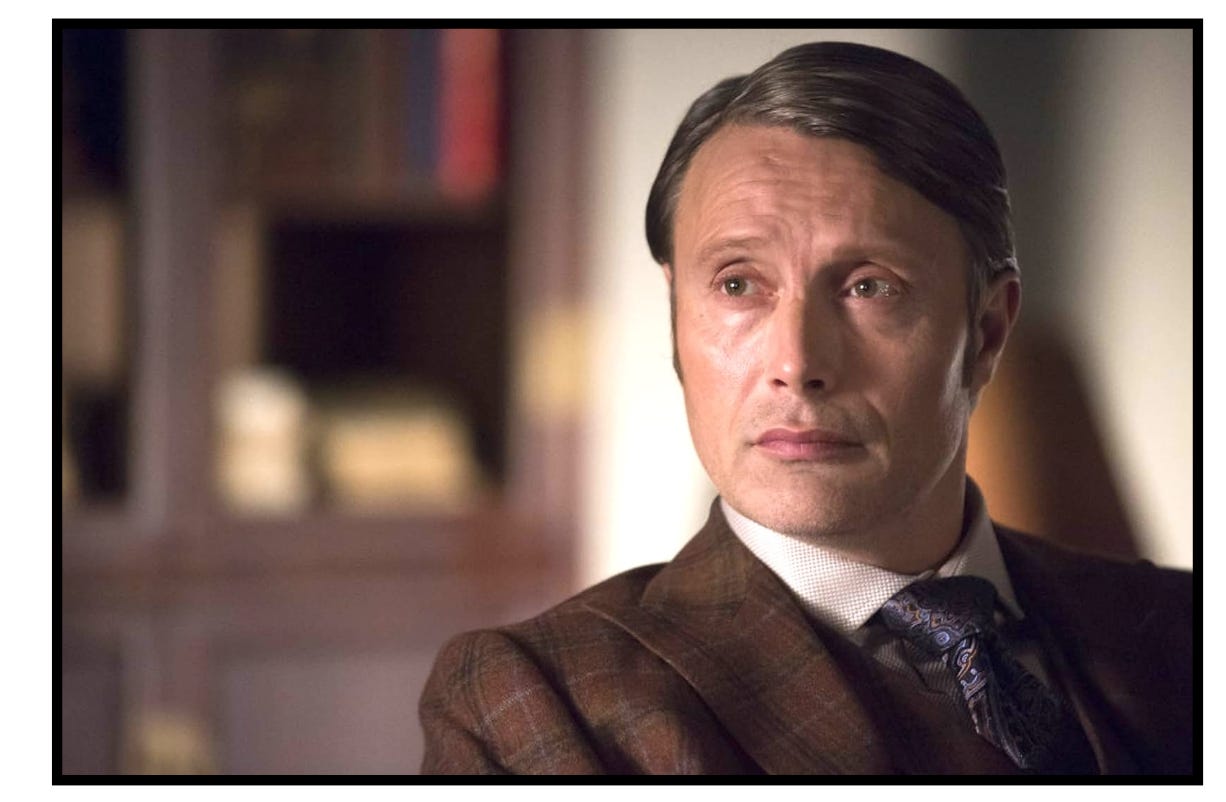
Like Cox in Manhunter, Mikkelsen doesn’t rely on grand gestures or over the top line delivery to make his version of Lecter menacing onscreen. Instead, Mikkelsen portrays Lecter as someone who is cold but refined; he’s soft-spoken, excessively polite, and quite intelligent.
For Mikkelsen, Lecter’s menace is similar to Brian Cox because it’s psychological: it isn’t what he does, it’s what he’s capable of doing that keeps viewers glued to the screen.
But Mikkelsen also adds something new to his version of Lecter that neither of his predecessors attempted: sensuality. His scenes with Will Graham pulsate with the same seductiveness and sexual ambiguity Ann Rice gave to Lestat in her classic novel, Interview With a Vampire.
So with three different versions of Dr. Hannibal Lecter (or Lecktor), the question remains: which one do you prefer?
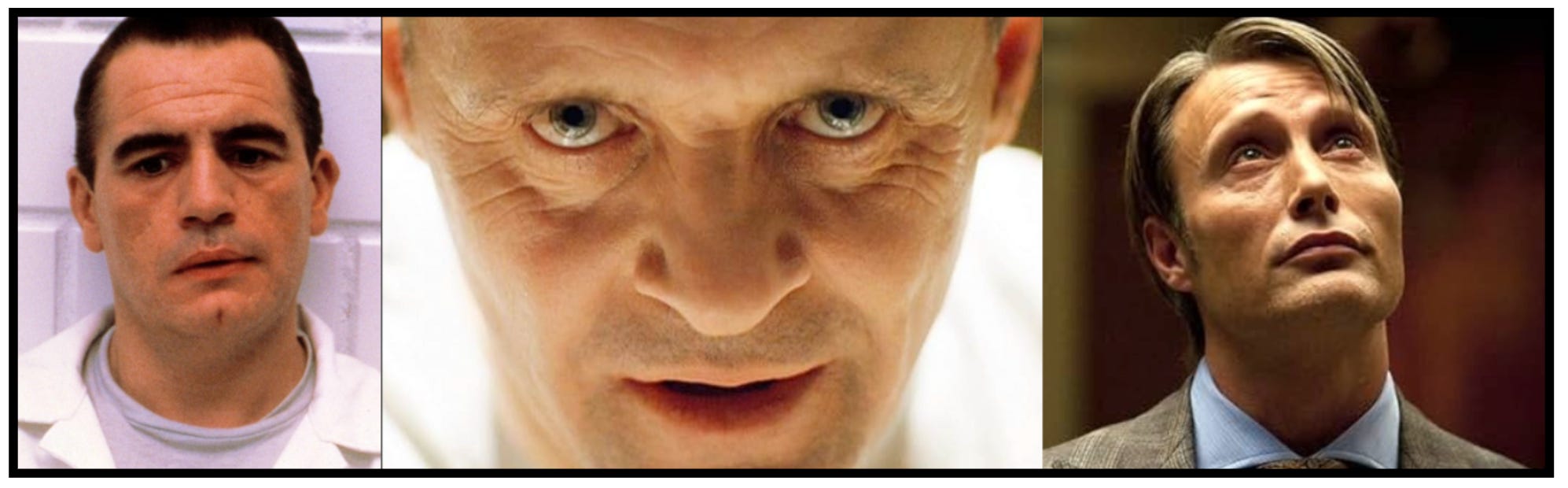
Of course, there is no right or wrong answer, but I think which Lecter you choose also depends on which film/show you like the best: Manhunter, The Silence of the Lambs (and it’s sequels), or the Hannibal television series.
For myself, my favorite Lecter is Brian Cox’s performance in Manhunter. I also like Michael Mann’s approach to Thomas Harris’ novel, Red Dragon, very much for the cool stylized aesthetic Mann brings to the film, both visually and through his use of music. (I’ve never been able to listen to Iron Butterfly’s “In-A-Gadda-Da-Vida” in the same way after seeing the movie). And, I think William Peterson and the rest of the cast all give great performances in the movie too. It’s a film I frequently revisit.
However, you may prefer one of the other versions or maybe you even like all three.
Either way, it’s clear that today Dr. Hannibal Lecter has joined the canon of iconic pop culture villains, taking his place alongside Freddy Krueger, The Joker, and Norman Bates. I’m not sure this is something novelist Thomas Harris imagined happening when he first created his fictional psychiatrist.
This is a fun one Jim. I enjoyed this immensely. There's just no touching Hopkins. It's permanent but we will have permutations of Hannibal over time - with many more variations to come, I am sure.
I have to go Hopkins. Silence Of The Lambs is a brilliant film. I love Manhunter though. I can rewatch both of these anytime